


The One Guy Who Showed Up
Did you know that the session that indirectly started the DevOps movement had exactly one attendee, and that the story of how that happened is worth telling? In 2008, Andrew Shafer pitched a talk called “Agile Infrastructure” at an Agile conference in Toronto, but he didn’t even show up to his own session, though Patrick Debois did, and rather than leaving when he found the room empty, he tracked Shafer down in the hallway and had the conversation he came for anyway (Watts, 2019). That chance non-meeting between two like-minded people set off a chain of events that led to the first DevOpsDays event in 2009 and eventually reformed how software gets built and distributed throughout the industry, giving rise to what is now a global discipline with thousands of job openings.
On the flip side, DevOps has a branding problem, in the sense that the word gets attached to job postings, product names, and conference themes so frequently that its actual definition has become harder to pin down. A straightforward way to think about it is that software has two major phases in its life. First, the phase where it gets built and the phase where it runs on the system in practice. For a long time, different teams owned each phase without talking to each other, which is the missing link that DevOps exists to connect.
A DevOps engineer is someone who sits in the middle ground of development and operations taking responsibility for the systems that move software from idea to production. For developers thinking about this transition, there is a misconception that stepping into DevOps means leaving development behind. In reality, it means applying what you already know about building software to how it performs once it is deployed.
Let’s Clear Something Up First
Before getting into what it takes to transition into DevOps, understanding the discipline is necessary as people enter it only seeing a part of the picture.
DevOps is not a job title nor just a tool or act of automating deployments. Instead, it is a way of working, designed to tie the two ends together between people who build software and the people responsible for running it in production.
Learning Kubernetes or CI/CD pipelines is a solid first step but treating them as the full scope of the field often leads to early lack of progress. Progress to the next level depends less on
tools and more on assessing real system behavior and owning performance in live environments.
This profession is often misunderstood as a rebranded operations role or something exclusive to large companies. In practical applications, this approach is widely used across industry. Yet in many sectors of the economy, the combination of technical expertise and systems-level thinking remains scarce, which contributes to strong market demand and high compensation for such professionals.
It’s More Than a Role Change
When people talk about moving into DevOps, they usually concentrate on tools, but the greater change comes from how you start to think about your work. As a developer, the goal is to build features that meet requirements and pass testing.
However, in a job like this, that idea of being “done” starts to be reconditioned as attention moves to what happens after the code is released and used in practical operations.
This also changes responsibility, since you are also thinking about how different parts of the system interact and affect each other.
In addition, the way success is measured also progresses, being that finishing a feature is no longer enough if the system cannot handle growth or recover quickly from complications.
Even with these changes, you remain involved in development, still writing code and solving problems, but you also take responsibility for how it performs in production.
The Skills You Need to Get Started
After recognizing how it changes in practice, the next question is about skills.
It’s less about mastering one corner of the system and more about learning how the whole machine fits together. This includes understanding how applications are carried out and how setbacks show up in production.
Moreover, there is also a need to be comfortable with automation. Repetitive tasks are not just time-consuming, they are also prone to mistakes.
Another important area is visibility. You need to understand what is happening inside your system while it is running, using logs, metrics, and monitoring tools.
Equivalently, communication is often underestimated at first but later proves to be a major contributor to the success of all kinds of operations. Considering that DevOps connects
different parts of the workflow, you need to coordinate with teams and stay aligned, especially during incidents.
Instead of trying to learn everything at once, it helps to see these skills as connected. The goal is not to collect tools, but to understand how systems work and how to respond when they do.
From Theory to Practice
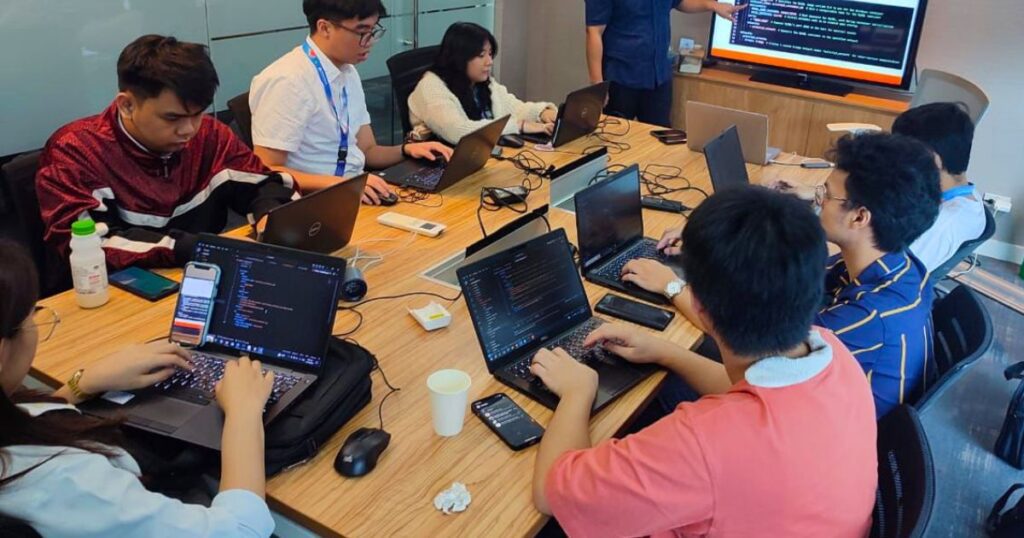
At this stage, DevOps starts to feel like a big puzzle where you already know the pieces but still need to understand how they fit together in real situations, when systems are running and changes are happening at the same time, which is why structured learning becomes helpful in seeing the bigger picture more clearly.
The transition into this profession do not happen all at once. It begins within your current role, by taking on responsibilities that go further writing codes and extend into how those codes is used and maintained.
One practical way to start is by working on small improvements in your existing workflow. This could mean setting up a basic CI/CD pipeline, automating a repetitive deployment step, or adding monitoring to an application you are already familiar with. These changes may seem minor, but they build the kind of experience that DevOps roles actually require.
Over time, these small steps compound. As you become more involved in how systems run in production, you start to develop the judgment that separates someone who knows the tools from someone who understands the system as a whole.
The goal is not to switch roles overnight, but to gradually expand your scope until the transition becomes taking the next step as natural as possible and not a blink of an eye kind of change.
Training What Comes Next
DevOps becomes harder to piece together when learning stays divided by topics instead of systems. Individual tools like CI/CD pipelines or cloud services are useful, but they gain substantial purpose when seen as part of a larger operational flow.
A structured approach helps bring that perspective into focus, particularly when moving from theory to practice.
Trainosys approaches DevOps training with an emphasis on how work unfolds in practice. Rather than presenting skills in isolation, the program outlines the connections between
them, allowing learners to see how each piece contributes to a larger system. This is valuable for those coming from a development background, where the adjustment calls for a different way of thinking more than just upgraded equipment
In the long run, the subject moves from familiarity to fluency, where learners can work through applied context with less room for doubt.
Trainosys prepares you for DevOps where the production is in your classroom.
Ready to Move Forward?
Visit trainosys.com to explore the full course roadmap.
Email [email protected] if you have questions about which courses fit your team, group pricing, or on-site delivery.